PPF vs Ceramic Coating: Which One Your Las Vegas Car Actually Needs
Overview
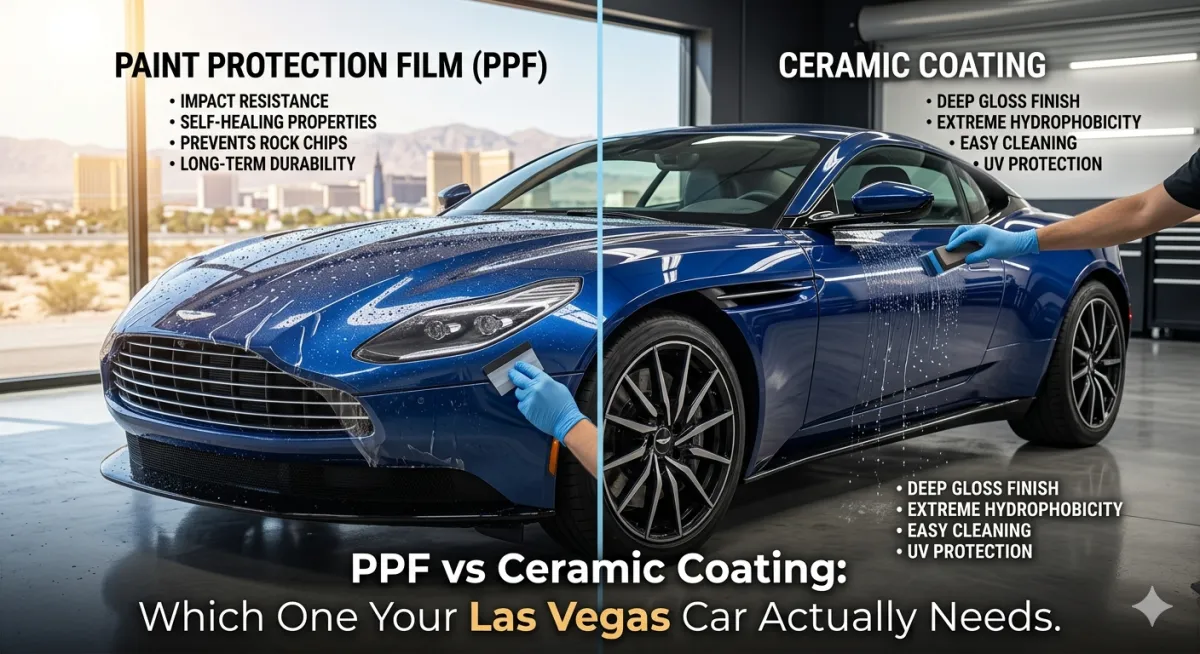
PPF (paint protection film) is a thick, clear urethane film applied to high-impact areas that physically blocks rock chips and scratches. Ceramic coating is a liquid polymer that bonds chemically to paint, providing UV and chemical protection with enhanced gloss. For most Las Vegas Valley drivers, ceramic coating offers the best cost-to-protection ratio for everyday use, while PPF is the answer for front-end rock chip protection on vehicles that spend serious time on the highway. The two are also stackable and that combination is the strongest paint protection approach available.
Get a Free Quote Flex Details serves Henderson and the Las Vegas Valley. Book at flexdetailslv.com to get started.
What Each One Does (And What It Doesn't)
PPF Physical Barrier Against Chips and Scratches
Paint protection film is exactly what it sounds like: a film that sits between the road and your paint. It's a thermoplastic urethane, typically 6-8 mils thick, applied with precision to specific panels or the entire vehicle. When a rock or road debris hits a PPF-covered surface, the film absorbs the impact instead of your clear coat.
High-quality PPF also has self-healing properties. Minor surface scuffs and scratches disappear with heat either from the sun or a warm water rinse. PPF does not prevent paint from UV fading the way ceramic does, but it provides a level of physical protection nothing else can match.
Ceramic Coating Chemical Barrier Against UV and Contaminants
Ceramic coating is a different category of protection entirely. It doesn't provide physical impact resistance a rock chip will still chip through a ceramic coating. What it does is bond chemically to your clear coat and create a hard, UV-resistant, hydrophobic surface that significantly slows the damage that Vegas Valley conditions cause daily.
Ceramic coating blocks UV radiation, resists chemical etching from alkaline dust and hard water, and makes the surface hydrophobic so water and contaminants shed instead of sitting and bonding. In Henderson, where UV and hard water are constant threats, ceramic is a long-term value play.
Durability Compared in the Las Vegas Valley
PPF 7-10 Year Physical Protection
Quality PPF from established brands carries 7-10 year manufacturer warranties. The film itself doesn't degrade in UV the way wax or sealants do, and high-end options include UV stabilizers that prevent yellowing or hazing over time. For vehicles staying in Henderson long-term, PPF is a one-time investment that holds up.
Ceramic 3-5 Year Chemical Protection
Professional-grade ceramic coatings last 3-5 years in Las Vegas Valley conditions with proper maintenance. Premium multi-layer 9H coatings can push 7+ years. The desert environment accelerates wear compared to moderate climates, and the main factors that shorten ceramic life are automated washes, harsh chemical cleaners, and skipped annual maintenance details.
Comparing your options? Get a free quote and Flex Details will get back to you fast.
Which One Is Right for You
Highway Commuters on I-215, I-15, and US-95
If you're logging significant miles on Las Vegas Valley highways daily, the front of your vehicle takes a constant barrage of gravel, debris, and insects. Highway driving is where PPF earns its cost. Front-end PPF on the bumper, hood leading edge, fenders, and mirrors covers the highest-impact areas and prevents the chip accumulation that builds up fast on commuter vehicles.
For those drivers, the combination approach PPF on the front end, ceramic coating on the full vehicle gives you chip protection where it matters most and UV/chemical protection everywhere else.
Garage-Kept Weekend Cars in Summerlin, Henderson, and Anthem
For a weekend car that doesn't see heavy highway miles, front-end chip damage is less of a daily concern. The bigger threats are UV exposure during drives, dust accumulation, and hard water from washes. Ceramic coating alone is often the right call here -- it covers those threats at a lower cost than PPF, and physical chip protection is less critical for a vehicle that isn't fighting highway debris every day.
Frequently Asked Questions
Can you put PPF and ceramic coating on the same car?
Yes, and this is a common and highly effective combination. PPF goes on first, and ceramic coating is applied over the top of the film. The ceramic adds UV protection, hydrophobic properties, and gloss enhancement to the film surface, while the PPF provides the chip resistance underneath. Stacked together, it's the most comprehensive paint protection available.
Which has better gloss ceramic or PPF?
Both can achieve excellent gloss, and the outcome depends more on product quality and installer prep than on the category. Ceramic coating on a well-corrected paint surface typically produces outstanding gloss and depth. High-gloss PPF products also look excellent, and when ceramic is applied over PPF, the result combines the benefits of both. Installer prep matters more than the product type.
Is PPF worth it on a used car in Las Vegas?
It depends on the paint condition. PPF applied over damaged or uncorrected paint locks in the defects. For a used car in fair condition, paint correction followed by ceramic coating is often a better investment than PPF. If the vehicle is in excellent shape with minimal paint defects, PPF is a worthwhile long-term investment regardless of whether it's new or used.
How long does each one really last in Vegas Valley heat?
PPF holds up well in desert heat the urethane material is heat-stable and won't break down the way polymer-based products do. Quality PPF is rated to 7-10 years and generally delivers on that in the Vegas climate. Ceramic coatings last 3-5 years with proper care in Las Vegas conditions, shorter if maintained with automated washes or harsh cleaners.
Flex Details offers free quotes in Henderson and across the Las Vegas Valley. Book your detail today and get the right protection for what you're driving.